
The Schengen 90/180 rule
On any day, you may have spent at most 90 of the last 180 days in the Schengen area, that day included. The 180 days move forward one day at a time, so it isn't 90 days per year or per visit, and leaving doesn't reset the count. Each day comes back 180 days after it.
Count your own days with the Schengen calculator
Who the rule applies to
Anyone who isn't a citizen of an EU country, Iceland, Liechtenstein, Norway or Switzerland and is visiting for a short stay. That covers visitors who don't need a visa, such as people from the UK, the US, Canada and Australia, and holders of short-stay Schengen visas.
It doesn't cover days you spend in a country on its residence permit or national long-stay visa. Those days aren't counted.
What the law says
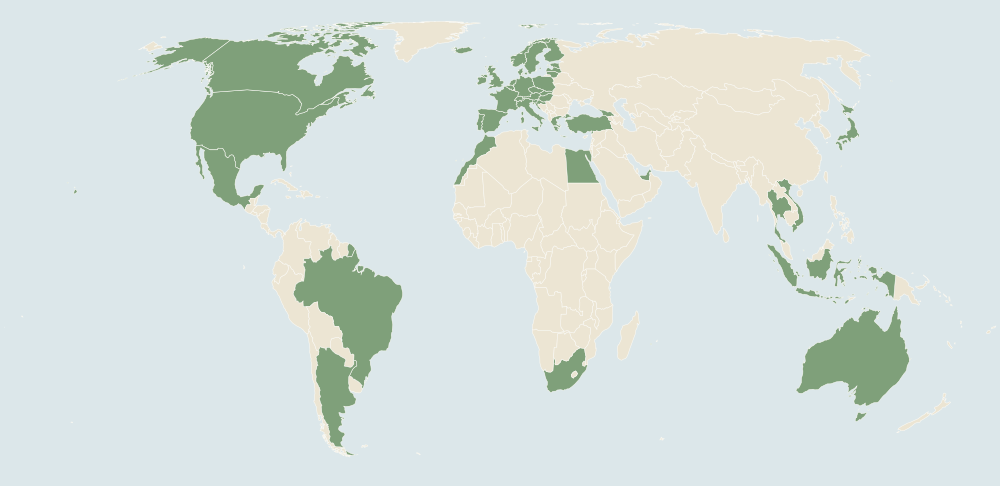
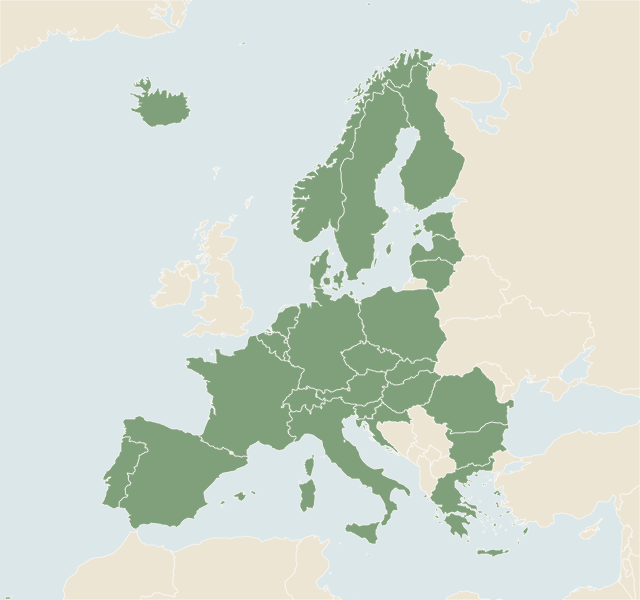
Article 6 of the Schengen Borders Code sets the limit of 90 days in any 180-day period. It says the date you enter is the first day of your stay and the date you leave is the last. The 90 days are counted as one period across all 29 countries that use the Entry/Exit System. Countries that don't use it, such as Cyprus, count your days separately.
How to count, step by step
- Pick the day you want to check, such as the last day of a trip you're planning.
- Take that day and the 179 days before it.
- Count every day you were in a Schengen country in that window. A day you arrived or left counts as a full day.
- 90 minus that count is the number of days you have left.
To plan a trip, check its last day, not its first. A trip can start inside the rule and end outside it.
Five worked examples
Each strip shows the 180 days up to the day being checked. Dark squares are days spent in Schengen.
1. One long stay
You arrive on 1 March and leave on 29 May. That's 90 days, counting both. You've used them all. Your first day comes back on 28 August, 180 days after 1 March, and the rest come back one a day after that.
2. Two trips that add up
1 March to 14 April is 45 days, and 1 June to 15 July is another 45. On 15 July you're at 90. You can't come back until 28 August, when 1 March drops out of the window.
3. Long weekends
Weekends of 4, 3 and 3 days use 10 days, which leaves 80. A full 90-day stay in one go is possible only once the first weekend falls out of the window.
4. Fine on arrival, over by the end
You spent 60 days from 1 February to 1 April, then arrive on 15 June for 40 days. On arrival you have 30 left, and none of the February days drop out before the trip ends. You reach 90 on 14 July, and the last 10 days are an overstay. Check the last day, not the first.
5. A trip to the UK in between
You spend 60 days in Spain, fly to London for two weeks, then go to France. The London days don't count, but they don't reset the 60 either. You arrive in France with 30 days left, and 17 days there leaves you 13.
Common mistakes
- Counting per calendar year. A new year changes nothing. The window always looks back 180 days.
- Counting per country. France and Germany share one count. Moving between them doesn't start a new one.
- Forgetting travel days. An evening arrival and a morning departure each count as a whole day.
- Treating a trip outside as a reset. Time in the UK, Ireland, Turkey or the Balkans pauses the count. Only days dropping out of the 180-day window come back.
- Relying on the EU's online check for older trips. It doesn't include time you spent in Schengen before 10 April 2026, but the rule still does.
How the border checks your count
Since 10 April 2026, the Entry/Exit System records every entry and exit at the outer border of the 29 countries, with your fingerprints and a photo of your face. It works out your remaining days and flags a stay over 90. You can check your remaining days with the EU's online tool on travel-europe.europa.eu, using your passport number. Read how the Entry/Exit System works.
ETIAS, the travel authorisation coming for visa-free visitors, doesn't change the rule: it allows the same 90 days in any 180. Read the ETIAS guide.
If you go over
Staying past your 90 days is an overstay. The Entry/Exit System records it, and the country where you're found decides what happens: a fine, removal, or a ban on coming back. Read what happens if you overstay.
The 90 days cover all 29 Schengen countries. See which countries count.
Questions
Is it 90 days every six months?
No. It's any 180-day window, and the window moves every day. With two fixed six-month blocks you could stay 180 days in a row across the change; the rule doesn't allow that.
Does the day I arrive count?
Yes. The day you arrive and the day you leave each count as a full day, even if you were there for an hour.
When do my days come back?
Each day comes back exactly 180 days after it. A stay from 1 to 10 March comes back one day at a time from 28 August to 6 September.
Does a new year reset my days?
No. The window always looks back 180 days from the day you check, whatever the year.
Do days in Cyprus count?
Not toward the 90 for the 29 Schengen countries. Cyprus counts its own 90 days in any 180 separately.
Do days on a residence permit count?
No. Days you spend in a country on its residence permit or long-stay visa aren't counted toward your 90.
Can I stay longer than 90 days?
Not as a short-stay visitor. A longer stay needs a national long-stay visa or a residence permit from the country you're staying in.
The private travel tracker that fills itself in
Your map, trips, flights and day counts, filled in from your photos, your phone's location and your booking emails.
- Trips from your photosPast trips too, from photos and Google Maps Timeline
- Flights from your inboxBooking emails become flights and stays
- Days in every countrySchengen and 183-day counts, with a warning first
- Private by designYour photos never leave your phone
Only launch news. Unsubscribe any time.